Define your token utility model
Tokenized engagement starts with a clear utility model. You are building a digital representation of customer value, not a speculative asset. The goal is retention through access and rewards, not trading. This distinction keeps your program compliant and focused on your core audience.
Think of the token as a key. It unlocks specific benefits—discounts, early access, or exclusive content. When customers hold the token, they have a direct stake in your brand’s ecosystem. This creates a loop of engagement that traditional points systems often lack.
Utility vs. Governance
Most customer retention programs only need utility tokens. These tokens function like digital currency within your platform. They can be earned through purchases or interactions and spent on rewards. This model is straightforward and aligns directly with sales goals.
Governance tokens give holders voting rights on company decisions. This model is complex and often triggers securities regulations. Unless you are building a decentralized autonomous organization (DAO), avoid governance tokens for customer loyalty. Focus on what customers get, not what they control.
Aligning with Retention Goals
Your token must solve a real problem for the customer. If the effort to earn and spend the token outweighs the benefit, engagement will drop. Design the utility to feel valuable and easy to use.
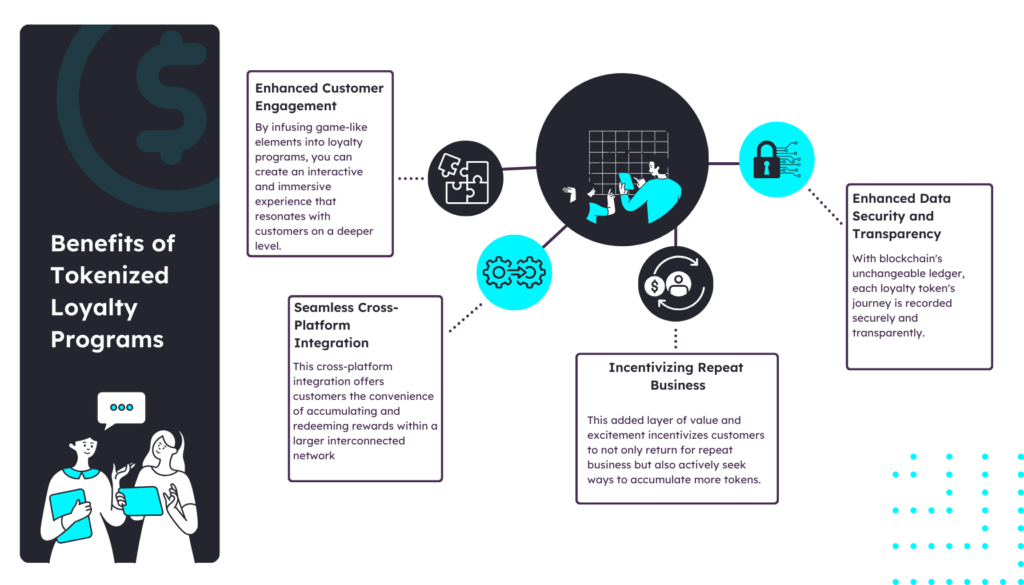
McKinsey notes that tokenization creates a "digital, unique, and anonymous representation of a real thing." In your context, that "real thing" is customer loyalty. By tokenizing it, you make loyalty portable, transparent, and more engaging. This approach builds long-term relationships rather than one-time transactions.
Select the right blockchain infrastructure
Choosing the right blockchain layer is the first technical decision in launching tokenized engagement. For consumer-facing loyalty programs, the infrastructure must balance transaction speed, low costs, and frictionless user onboarding. Mainnet Ethereum is often too expensive and slow for high-frequency interactions like earning or redeeming points. Instead, Layer 2 solutions or specialized chains offer the necessary scalability.
Compare L1 vs. L2 costs and performance
The difference between a Layer 1 (L1) and a Layer 2 (L2) or sidechain is stark when handling thousands of small loyalty transactions. L2s like Polygon or Ethereum L2s (Arbitrum, Optimism) settle transactions off the main chain, drastically reducing gas fees while maintaining security. This cost efficiency is critical for micro-rewards that would otherwise be economically unviable on L1.
| Network | Avg. Tx Cost | Finality | Onboarding |
|---|---|---|---|
| Ethereum L1 | $2–$10+ | 12–15 sec | High (Gas fees) |
| Polygon PoS | <$0.01 | 2–3 sec | Low (MetaMask) |
| Arbitrum One | <$0.01 | ~1 min | Medium (Bridge) |
| Base | <$0.01 | ~2 sec | Low (Coinbase Wallet) |
Prioritize user onboarding friction
Beyond raw costs, the ease of onboarding determines user adoption. Chains that support account abstraction or integrate with popular wallets like MetaMask or Coinbase Wallet reduce the barrier to entry. Users should not need to manage complex gas tokens or bridge funds manually for every small reward. Polygon and Base are particularly strong here due to their established wallet integrations and low fees.
Evaluate ecosystem compatibility
Your existing tech stack must integrate smoothly with the chosen blockchain. If your loyalty platform already uses Ethereum-compatible tools, an L2 like Arbitrum or Optimism offers a seamless transition with minimal code changes. For new projects, consider chains with robust developer documentation and established loyalty program templates. Polygon’s long history with consumer apps makes it a reliable choice for high-volume engagement.


As an Amazon Associate, we may earn from qualifying purchases.
Make the final selection
For most consumer loyalty programs, Polygon or an Ethereum L2 is the optimal choice. They provide the speed and cost structure needed for frequent micro-transactions while maintaining the security guarantees of the Ethereum ecosystem. Avoid L1 mainnets unless your rewards are high-value and infrequent. Start with a testnet to validate your transaction flow before committing to mainnet deployment.
Design the reward distribution mechanics
Tokenized engagement relies on precise automation to ensure rewards are issued accurately and transparently. The core challenge is bridging off-chain customer actions with on-chain token issuance. This requires a technical workflow where smart contracts trigger minting events only when specific, verified conditions are met.
1. Define the trigger events
Before deploying any code, map the exact customer behaviors that warrant a reward. Common triggers include purchase completion, loyalty tier upgrades, or social referrals. Each event must be distinct and measurable. For example, a "purchase" event should only trigger when payment is fully settled, not when an order is merely placed. This precision prevents reward inflation and ensures the token retains its value.
2. Integrate real-world data feeds
Smart contracts cannot natively read off-chain data. You need an oracle or an API gateway to verify customer actions. Services like Stamply demonstrate how physical presence and digital verification can be combined to trigger on-chain rewards securely [[src-serp-3]]. The oracle fetches the event data from your backend, validates it against predefined rules, and passes the signed proof to the smart contract. This step is critical for preventing fraud, such as bot-generated fake purchases.
3. Automate token minting
Once the oracle confirms the event, the smart contract executes the minting function. The contract should automatically calculate the reward amount based on your predefined logic (e.g., 1 token per $10 spent). The tokens are then transferred directly to the customer’s wallet. This process is instant and immutable, providing immediate confirmation of the reward. Using established standards like ERC-20 or ERC-1155 ensures compatibility with existing wallets and exchanges.
4. Implement burn or decay mechanisms
To maintain long-term engagement, design mechanics that encourage continued interaction. This might include token expiration dates, staking requirements to maintain status, or burn mechanisms that reduce supply based on redemptions. These features prevent token hoarding and ensure the ecosystem remains dynamic. Transparent rules for these mechanisms should be hardcoded into the contract to maintain trust.
5. Test and audit the distribution logic
Before going live, rigorously test the entire flow. Simulate various customer scenarios, including edge cases like failed payments or duplicate transactions. Conduct a security audit of the smart contract to identify vulnerabilities. This step is non-negotiable for high-stakes financial applications. Ensure that the oracle also has fallback mechanisms in case of data delays or errors.
Integrate with existing CRM systems
Connecting your Web3 token wallets to your traditional CRM creates a unified view of the customer. Without this bridge, tokenized engagement exists in a silo, fragmenting the user experience and making it difficult to track the full lifetime value of a holder. The goal is to ensure that on-chain activity—such as minting, staking, or redeeming tokens—updates the same customer profile used for email marketing and support.
Start by identifying the middleware or API connectors that map blockchain addresses to your CRM’s unique customer IDs. Most major platforms, including Salesforce and HubSpot, offer or support plugins that allow for this data synchronization. Verify that your integration can handle real-time or near-real-time updates so that a customer’s token balance or loyalty status reflects accurately in your marketing campaigns.
Once the technical bridge is established, focus on data hygiene. Ensure that the fields capturing token data (e.g., token type, balance, expiry) are standardized across your CRM. This prevents clutter and allows your marketing team to segment users effectively based on their Web3 engagement. For instance, you can create a segment for "active stakers" to target with specific retention offers, ensuring that tokenized engagement enhances rather than complicates your existing retention strategy.
Finally, test the integration with a small group of beta users. Monitor for data mismatches or sync delays. A broken link between the wallet and the CRM can lead to incorrect communications, such as sending a reward redemption offer to a user whose tokens have already expired. Rigorous testing ensures that the tokenized layer adds value without introducing friction to the core customer relationship.
Monitor engagement and adjust incentives
Token velocity determines how quickly rewards circulate and are redeemed. High velocity signals active participation but risks inflation if supply outpaces utility. To maintain long-term loyalty, you must track redemption rates alongside holding periods.
Start by defining your baseline metrics. Measure the percentage of tokens held versus those spent within the first 30 days. If redemption exceeds 60% of total supply in a month, your incentives may be too aggressive, leading to a "pump and dump" cycle. Conversely, if less than 10% are used, the tokens lack perceived value.
Adjust the tokenomics based on this data. Introduce decay mechanisms or staking requirements to slow velocity if inflation looms. This aligns with findings that tokenized engagement increases sharing willingness, but requires careful balance to prevent misuse or spam.
Sustainability Checklist
Regularly audit these metrics. A healthy program shows steady, moderate velocity with growing retention. When velocity spikes, immediately introduce friction or reduce reward issuance to preserve token value and user trust.
Frequently asked questions about tokenized engagement
Tokenized engagement uses digital assets to drive customer retention. Here are answers to common questions about how it works, who leads the market, and what risks to watch.
Work through The to Tokenized Engagement
No comments yet. Be the first to share your thoughts!