
Define your tokenomics model
Build Tokenized Engagement for Web3 Loyalty Programs works best as a clear sequence: define the constraint, compare the realistic options, test the tradeoff, and choose the path with the fewest hidden costs. That order keeps the advice usable instead of decorative. After each step, pause long enough to check whether the recommendation still fits the reader's actual situation. If it depends on perfect timing, unusual access, or a best-case budget, include a simpler fallback.
The simplest way to use this section is to write down the real constraint first, compare each option against it, and choose the path that still works outside ideal conditions.
Integrate on-chain reward triggers
Linking off-chain customer actions to on-chain smart contracts requires a reliable bridge between the physical or web world and the blockchain. When a user buys a product, shares a post, or attends an event, that action must be verified before tokens are minted or transferred. This process transforms casual engagement into verifiable, owned assets.
The integration relies on oracles or API bridges to act as trusted messengers. Without this layer, smart contracts cannot natively see off-chain events. The system must ensure that the data feeding the contract is accurate and tamper-proof, maintaining the integrity of the loyalty program.
When a customer completes a purchase or social share, your backend or point-of-sale system logs the transaction. This initial data capture is the trigger. Ensure the event includes unique identifiers, such as a user wallet address or a transaction ID, to link the action to a specific identity on-chain.
Use a decentralized oracle network or a secure API bridge to fetch and verify the off-chain data. Oracles like Chainlink are commonly used to ensure that the information reaching the smart contract has not been altered. This step confirms that the loyalty criteria were actually met before any financial value is assigned.
Once the oracle confirms the valid event, it triggers the corresponding function in your loyalty smart contract. The contract checks the user’s eligibility and balance. If the conditions are met, the contract executes the logic to mint new tokens or transfer existing ones to the user’s wallet. This happens automatically, removing the need for manual reward distribution.
The final step involves reflecting the change in the user’s wallet and notifying them of the reward. Since blockchain transactions are public, the user can verify the receipt of tokens directly on the explorer. Simultaneously, send a push notification or email to confirm the reward, closing the loop on the engagement cycle.
This automated flow ensures that rewards are distributed instantly and transparently. By relying on verified data sources, you prevent fraud and build trust with users who value the authenticity of their digital assets. The result is a loyalty program where every interaction holds tangible, verifiable value.
Design the user redemption flow
The redemption flow is the critical bridge between Web3 engagement and tangible value. If users cannot easily convert tokens into rewards, the entire loyalty program loses its utility. The goal is to make the transaction feel as frictionless as a traditional points deduction, hiding the underlying blockchain complexity behind a familiar interface.
1. Connect wallet to redemption portal
Start by ensuring the user’s Web3 wallet is securely connected to your loyalty dashboard. Use standard connection protocols to verify ownership without exposing private keys. This step establishes the identity layer required to check token balances and execute smart contract interactions.
2. Display real-time token balance and value
Show the user their current token holdings alongside the estimated fiat or reward value. Transparency builds trust. If gas fees are required for the redemption transaction, display this cost upfront. Consider subsidizing gas fees for high-value redemptions to remove friction, a practice supported by research into blockchain-based incentive structures.
3. Select reward and confirm transaction
Allow the user to browse available rewards and select one. Once selected, present a clear confirmation screen detailing the token cost and any associated fees. Upon user approval, the smart contract executes the transfer. Ensure the interface provides immediate feedback on success or failure, guiding the user through any potential errors.
4. Deliver reward via traditional or digital channel
After the blockchain transaction is confirmed, trigger the reward delivery. This can be an automated digital code sent via email or a notification to a physical store for in-person redemption. The key is to ensure the reward arrives quickly and reliably, closing the loop between digital action and physical or digital benefit.
-
Wallet compatibility checked across major providers
-
Gas fee subsidy strategy defined
-
Customer support trained on Web3 issues
-
Legal disclaimer for digital assets published
Address compliance and security risks
Tokenized loyalty programs sit at the intersection of consumer engagement and financial regulation. Unlike standard points, tokens can carry monetary value, triggering scrutiny from regulators who monitor for securities violations, money laundering, and fraud. You must treat your token infrastructure with the same rigor as a banking application.
Verify securities classification
The first step is determining whether your token constitutes a security. If the token is sold with an expectation of profit from the efforts of others, it likely falls under securities laws (such as the Howey Test in the U.S.). Misclassification can lead to severe penalties. Consult legal counsel to define your token as a utility or a security before deployment. This distinction dictates your KYC/AML obligations and disclosure requirements.
Implement KYC/AML protocols
Financial tokens require strict Know Your Customer (KYC) and Anti-Money Laundering (AML) checks. Integrate identity verification services that comply with regional regulations (e.g., FinCEN in the U.S., MiCA in the EU). Ensure that your smart contracts can enforce transfer restrictions for unverified wallets. This prevents anonymous actors from using your loyalty program for illicit finance.
Audit smart contracts
Security is non-negotiable. Hire a reputable third-party firm to audit your smart contract code before mainnet launch. Audits identify vulnerabilities like reentrancy attacks or integer overflows that could drain user balances. Treat the audit report as a public trust document; share findings to demonstrate transparency to your community.
Recommended tools for launch
Building a tokenized loyalty program requires infrastructure that handles identity, compliance, and data without forcing developers to manage private keys or audit smart contracts from scratch.
Wallet-as-a-Service (WaaS) WaaS providers abstract away the complexity of key management for your users. For enterprise adoption, look for solutions that support account abstraction (ERC-4337) to enable gasless transactions and social login. This reduces friction for non-crypto natives who just want to earn rewards.
Smart Contract Platforms Choose a blockchain with low transaction fees and high throughput to handle frequent loyalty point accruals. Ethereum L2s like Arbitrum or Optimism, or specialized chains like Polygon, offer the security of Ethereum with the cost efficiency needed for micro-rewards. Ensure the platform supports standard token interfaces (ERC-1155 for semi-fungible loyalty points) for easy integration.
Analytics and Compliance Tools You need real-time visibility into token distribution and holder behavior. Tools like Dune Analytics or custom dashboards connected to your node provider allow you to track engagement metrics. For compliance, integrate identity verification (KYC) providers if your program involves any financial incentives or regulated assets.


As an Amazon Associate, we may earn from qualifying purchases.
Common questions about tokenized loyalty
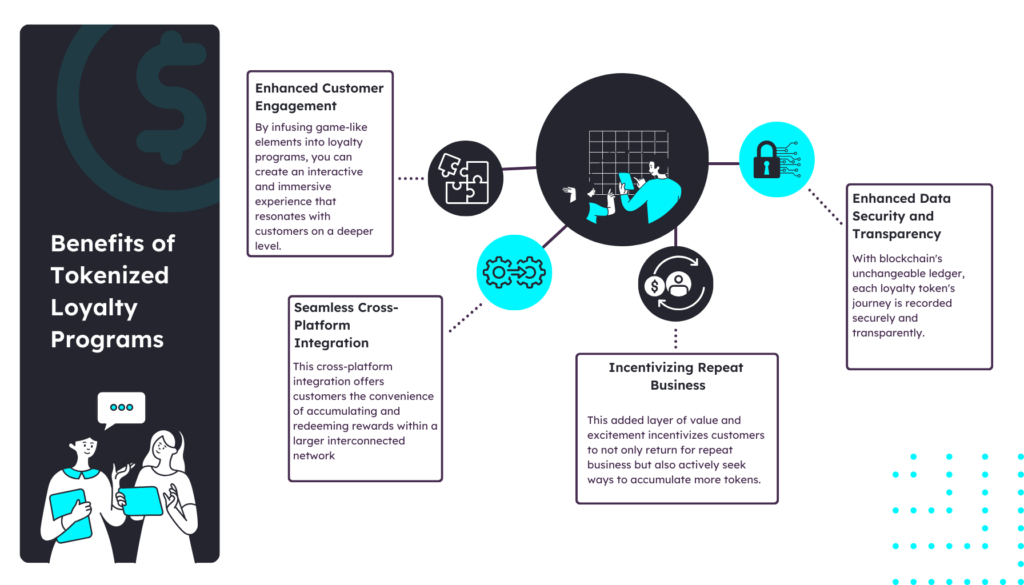
Tokenized loyalty programs use blockchain technology to convert customer interactions into digital assets. These assets function as verifiable records of engagement, allowing brands to issue rewards that are transparent, tradable, and programmable through smart contracts.
What does it mean to be tokenized?
In the context of loyalty, tokenization is the process of representing an entitlement or engagement milestone in digital form. Instead of points stored in a private database, customers hold tokens on a blockchain. This shifts ownership from the brand to the user, enabling features like transferability and verifiable scarcity [src-2].
What are the downsides of tokenization?
The primary risk is the potential for unintended consequences in user behavior. Research indicates that token rewards can increase the willingness to share content, including misinformation, as users prioritize the reward over content quality [src-1]. Additionally, the complexity of managing digital wallets and understanding gas fees can create friction for non-technical users.
Is XRP part of tokenization?
XRP is a digital asset that operates on the XRP Ledger, which supports tokenization capabilities. It is one of many assets used in the broader ecosystem of tokenized finance and loyalty, but it is not a specific "tokenization protocol." Brands may choose XRP for settlement due to its speed and cost, but tokenization itself is a conceptual framework applicable to many blockchains [src-5].
No comments yet. Be the first to share your thoughts!