
Defining tokenized engagement value
Tokenized engagement is not the same as passive holding. Many programs mistake the accumulation of loyalty points or tokens for success, but a wallet full of unused assets signals disengagement, not loyalty. True tokenized engagement requires active participation—transactions, interactions, and consistent usage—that drives measurable business outcomes like retention and lifetime value (LTV).
Research indicates that simple incentives, such as the promise of token-based rewards for specific actions, significantly increase user willingness to share and interact. This suggests that the value of tokenized engagement lies in the behavior it triggers, not the static balance it creates. When users actively transact or interact to earn rewards, they form a stronger psychological and financial tether to the brand.
To understand the financial impact of this active participation, you can estimate the potential return on investment by comparing the cost of token rewards against the projected increase in customer lifetime value. Use the calculator below to model how active engagement strategies might outperform traditional point-based systems.
Calculating engagement ROI inputs
Measuring the return on investment for tokenized engagement requires separating the financial mechanics of token distribution from the behavioral shifts they drive. Unlike traditional loyalty points, tokens carry variable costs and secondary market dynamics, meaning your input variables must account for both direct issuance expenses and the resulting lift in customer value.
Direct issuance costs
The first input is the total cost of token distribution. This includes the gas fees for minting and airdropping rewards, as well as any platform fees charged by the loyalty infrastructure provider. Unlike static points, tokens can appreciate or depreciate based on market sentiment, so you must also track the fiat value of tokens at the moment of issuance versus their value when redeemed. Ignoring these fluctuating costs can skew your ROI baseline, making a program appear more expensive or profitable than it actually is.
Active user participation
Tokenized engagement relies on active wallet interaction rather than passive accumulation. The primary metric here is the number of unique active wallets engaging with your rewards ecosystem over a specific period. This includes users claiming rewards, trading tokens, or using them for purchases. A high number of issued tokens means little if the majority remain dormant. You need to track the ratio of active participants to total token holders to understand the true depth of engagement. Programs that successfully bridge real-world experiences with on-chain rewards, such as those using physical presence verification, often see higher participation rates because the tokens serve as verifiable proof of loyalty.
Revenue lift and retention
The final input is the financial impact driven by token holders. This involves calculating the average order value (AOV) lift for users who engage with tokens compared to those who do not. You should also measure retention rates, specifically the repeat purchase frequency of token holders. Tokens create a "sticky" effect; users are more likely to return to a brand where they hold an asset. By isolating the revenue generated exclusively by token-driven transactions, you can determine the incremental value added by the program, separate from organic brand loyalty.
On-chain retention vs traditional loyalty
Traditional Web2 loyalty programs operate like walled gardens. Points are trapped within a single brand’s ecosystem, creating friction that discourages long-term engagement. Users accumulate points they cannot use elsewhere, leading to low redemption rates and eventual churn. This siloed approach limits the perceived value of the rewards, making it harder to sustain interest over time.
Tokenized engagement flips this model by treating rewards as liquid assets. On-chain tokens can be traded, staked, or used across multiple platforms within a broader ecosystem. This liquidity transforms loyalty from a static collection of points into an active financial instrument. Users are more likely to retain their holdings when they perceive tangible, transferable value, directly boosting long-term retention metrics.
The difference in efficiency is stark. Traditional programs often struggle to prove their return on investment due to opaque redemption data. On-chain systems provide transparent, immutable records of every interaction and transaction. This clarity allows brands to optimize campaigns in real time, ensuring that retention efforts are driving actual value rather than just accumulating unused liabilities.

| Metric | Traditional Loyalty | Tokenized Engagement |
|---|---|---|
| Data Ownership | Centralized (Brand-controlled) | Decentralized (User-controlled) |
| Transferability | None (Siloed) | High (Interoperable) |
| Redemption Friction | High (Complex rules) | Low (Direct exchange) |
| Retention Driver | Points accumulation | Asset value & utility |
| Transparency | Opaque (Black box) | Public (On-chain ledger) |
By shifting from points to tokens, brands unlock a new layer of user commitment. The ability to trade or utilize rewards outside a single app creates a network effect that traditional programs simply cannot match. This structural advantage is why tokenized engagement is becoming the standard for high-value loyalty initiatives.
Real-world tokenized engagement examples
Brands are moving beyond simple points systems by using tokenized engagement to bridge the gap between physical actions and digital value. This approach treats loyalty as a transferable asset rather than a closed-loop score, allowing customers to interact with brands in new ways.
Stamply: Verifying Physical Presence
Stamply connects real-world experiences to on-chain rewards through tokenized engagement. The platform verifies physical presence at events or locations, then issues blockchain-based tokens to participants. This method ensures that rewards are earned through actual attendance or interaction, reducing fraud and increasing the perceived value of the incentive.
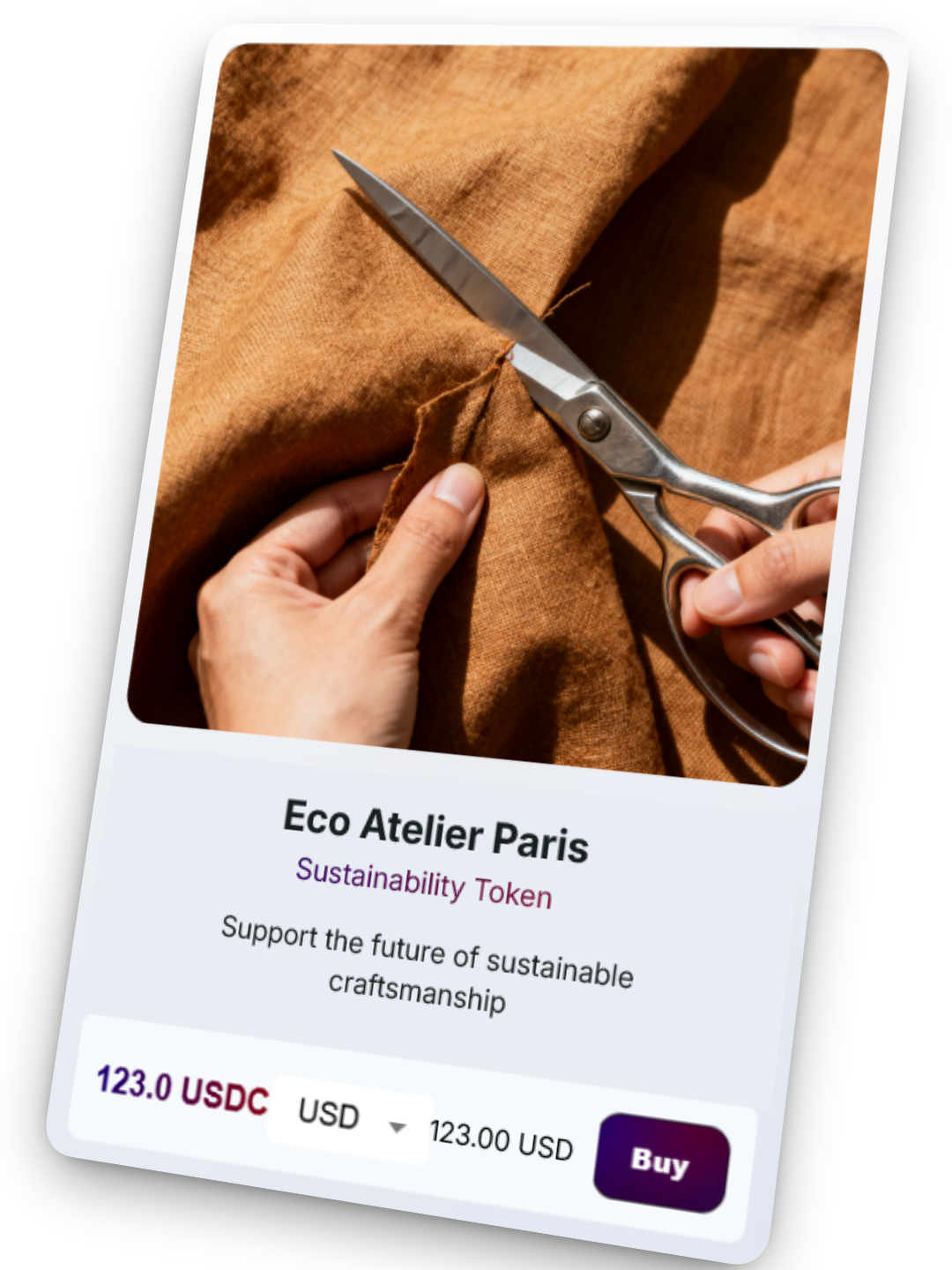
Eco-Tourism: Gamified Sustainability
Research indicates that blockchain smart contracts and gamified token rewards can significantly boost engagement in eco-tourism. By tokenizing sustainable behaviors, such as using public transport or reducing waste, brands can offer immediate, verifiable rewards. This creates a direct feedback loop where environmental responsibility is both recognized and compensated through digital assets.
The Shift from Points to Assets
Traditional loyalty programs often suffer from fragmentation and low redemption rates. Tokenized engagement solves this by making rewards interoperable. Customers can hold, trade, or spend their tokens across different platforms, turning loyalty points into liquid value. This shift encourages deeper participation as users see their engagement as a tangible investment rather than a forgotten balance.
Implementing a tokenized loyalty strategy
Launching a tokenized engagement program requires moving beyond simple point accrual to designing a functional digital economy. Brands must treat tokens as equity in a micro-community, ensuring they have utility, scarcity, and clear redemption paths. This approach shifts loyalty from a passive receipt system to an active participation model where users feel genuine ownership over their rewards.
1. Define token utility and scarcity
Before writing code, determine what the token actually does. Tokens should unlock specific experiences, discounts, or governance rights that fiat points cannot. Establish a fixed supply or a deflationary mechanism to prevent inflation from devaluing user rewards. Without scarcity, the token becomes just another database entry with no perceived value.
2. Design the tokenomics model
Map out the flow of tokens: how users earn them through engagement and how they spend them. Ensure the burn rate or redemption cost aligns with your customer lifetime value. A balanced model rewards active users while maintaining the brand’s margin. This economic layer is the backbone of long-term retention.
3. Select the blockchain infrastructure
Choose a network that balances speed, cost, and user accessibility. Ethereum offers robust security but high gas fees, while layer-2 solutions or alternative chains provide lower costs for micro-transactions. The choice dictates the user experience; high friction will kill adoption before it starts. For most consumer loyalty programs, low-cost, high-throughput chains are preferred.
4. Build and audit smart contracts
Develop the smart contracts that govern token issuance and transfers. Security is non-negotiable; a single vulnerability can drain user funds and destroy brand trust. Hire a reputable third-party auditor to review the code before deployment. This step is critical for protecting both the brand and its community.
5. Launch and onboard users
Create a seamless onboarding flow that abstracts away wallet complexity. Consider using account abstraction or social logins to let users interact without managing private keys immediately. Educate users on how to claim and use their tokens through clear in-app tutorials. Adoption hinges on reducing the technical barrier to entry.
Common questions about tokenized engagement
Understanding the mechanics behind tokenized engagement helps clarify how these programs drive loyalty. Below are answers to frequent questions about definitions, transactions, and assets.
These examples illustrate how tokenized engagement bridges the gap between traditional loyalty programs and modern digital ecosystems.
No comments yet. Be the first to share your thoughts!