
Define your loyalty token utility
The first step in building a tokenized engagement program is deciding what the token actually does. Too many projects launch tokens that function primarily as speculative assets, hoping for price appreciation to drive interest. This approach rarely sustains long-term retention because the value is tied to market volatility rather than customer behavior.
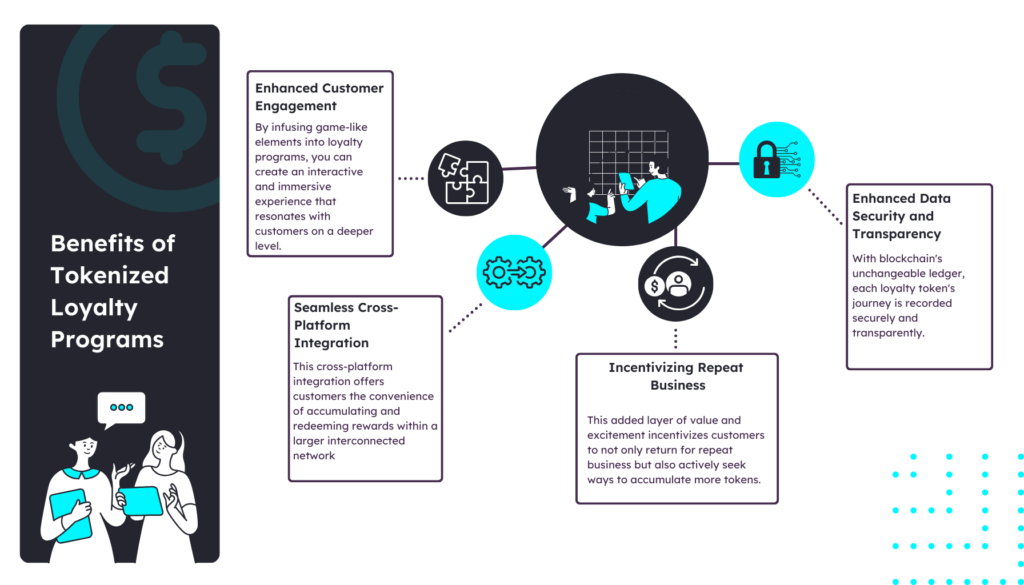
Instead, treat your token as a utility-driven loyalty point. The primary goal is retention, not trading volume. A useful token must offer clear redemption value. Customers should be able to exchange it for tangible benefits, such as discounts, exclusive access, or premium features. This utility creates a direct loop between engagement and reward.
Tokens must offer clear redemption value to drive retention, not just trading volume.
When designing this utility, focus on the customer journey. Ask what actions you want to encourage—repeat purchases, referrals, or community participation—and assign token rewards to those specific behaviors. If the token has no practical use within your ecosystem, it becomes just another digital asset with no inherent reason to hold. By anchoring the token to real-world benefits, you shift the focus from speculation to genuine customer loyalty.
Choose the right blockchain infrastructure
Selecting a blockchain for your tokenized engagement program requires balancing three competing priorities: transaction cost, processing speed, and regulatory compliance. Customer-facing applications cannot tolerate high gas fees or slow confirmation times, but they also cannot ignore the legal frameworks that protect user assets.
The landscape has split into three distinct categories. Layer 1 blockchains offer the highest security but often struggle with throughput. Layer 2 solutions provide the speed and low costs needed for retail engagement while settling on a secure base layer. Permissioned chains offer the compliance features required by traditional financial institutions, though they sacrifice some decentralization.
Compare these infrastructure options side-by-side to find the right fit for your specific use case.
| Chain Type | Avg. Tx Cost | Finality | Compliance Features |
|---|---|---|---|
| Layer 1 (e.g., Ethereum) | $1–$50 | 12–60 seconds | Limited native tools |
| Layer 2 (e.g., Polygon) | <$0.01 | 1–2 seconds | Standard EVM |
| Permissioned (e.g., Hyperledger) | Internal | <1 second | Native KYC/AML |
Layer 2 networks are currently the preferred choice for customer-facing engagement programs. They offer the sub-cent transaction costs necessary for micro-rewards and high-frequency interactions, while maintaining the security guarantees of the underlying Ethereum mainnet. For programs requiring strict identity verification or dealing with regulated securities, permissioned chains provide the necessary audit trails and access controls.

As an Amazon Associate, we may earn from qualifying purchases.
Design the minting and distribution flow
Build Tokenized Engagement Programs works best as a clear sequence: define the constraint, compare the realistic options, test the tradeoff, and choose the path with the fewest hidden costs. That order keeps the advice usable instead of decorative. After each step, pause long enough to check whether the recommendation still fits the reader's actual situation. If it depends on perfect timing, unusual access, or a best-case budget, include a simpler fallback.
Integrate redemption and secondary markets
Closing the loop on tokenized engagement requires two distinct flows: direct redemption for immediate value and secondary market trading for long-term liquidity. When users can swap tokens for goods or sell them to others, the perceived value of your program increases significantly.
Set up direct redemption channels
The most straightforward way to close the loop is allowing users to exchange tokens for tangible rewards or digital perks. This creates an immediate feedback loop that reinforces positive behavior. Integrate your token contract with a redemption gateway that validates balances and issues rewards in real-time.
Consider offering a tiered redemption menu. Basic tokens might unlock small discounts or digital badges, while premium tokens grant access to exclusive events or physical merchandise. This structure encourages users to accumulate more tokens rather than spending them immediately.
Enable secondary market trading
For programs aiming for higher engagement, enabling secondary market trading allows users to sell their tokens to other participants. This introduces a speculative element that can drive initial adoption, as users see potential financial upside. Ensure your smart contracts comply with local regulations regarding asset transfer to avoid legal pitfalls.
Trading liquidity depends on a healthy user base. Start by facilitating peer-to-peer trades within your platform before considering integration with external decentralized exchanges. This keeps the ecosystem contained and manageable while you build critical mass.
Monitor and adjust
Track redemption rates and trading volumes to understand user preferences. If redemption is low, users may find the rewards insufficient. If trading dominates, you might need to restrict secondary sales to maintain brand control. Regularly audit your tokenomics to ensure the supply and demand balance remains healthy.
By integrating both redemption and trading, you create a robust engagement engine that rewards loyalty while allowing for flexible value exchange. This dual approach ensures your tokenized program remains relevant and valuable to users over time.
Ensure compliance and user security
Tokenized engagement programs blend marketing rewards with financial infrastructure, which means they inherit the regulatory scrutiny of securities. The U.S. Securities and Exchange Commission (SEC) clarified in early 2026 that tokenized assets are financial instruments subject to existing securities laws, regardless of whether they represent loyalty points or fractional ownership 1. This distinction determines whether your program falls under consumer marketing guidelines or strict financial compliance frameworks.
To build a compliant and secure program, follow this sequence:
- Classify the token: Determine if the token constitutes a security. If it offers an expectation of profit from the efforts of others, it is likely a security. Consult legal counsel to classify the asset correctly before development begins.
- Implement KYC/AML checks: If the token is a security, you must verify user identities (Know Your Customer) and monitor for suspicious activities (Anti-Money Laundering). Integrate automated screening tools early in the user onboarding flow.
- Audit smart contracts: Engage a reputable third-party firm to audit your smart contracts for vulnerabilities. This step is non-negotiable for security and often required by compliance standards.
- Secure wallet custody: Decide on a custody model. Self-custody puts the burden of security on the user, while institutional custody solutions offer insurance but limit user control. Choose based on your target audience's technical literacy.
Pre-launch compliance checklist
Use this checklist to verify your program meets security and regulatory standards before launch.
-
Legal classification document signed by counsel
-
KYC/AML provider integrated and tested
-
Smart contract audit report reviewed and issues resolved
-
Custody solution selected and tested
-
Privacy policy updated to reflect token data handling
-
User agreement drafted and reviewed
Common questions about tokenized loyalty
Tokenized loyalty programs are moving from experimental pilots to regulated infrastructure. Understanding how these assets function helps you evaluate which programs offer genuine utility versus speculative hype.
Will XRP be used to tokenize assets?
XRP serves as a bridge currency for cross-border settlements, making it a candidate for liquidity in tokenized ecosystems. Its primary role is facilitating fast, low-cost transfers between traditional finance and digital assets rather than holding the asset title itself.
What assets are being tokenized right now?
Current tokenization efforts focus on liquid, high-value assets like treasury bills, real estate, and private credit. RedStone forecasts that $50–60 billion of real-world assets will be tokenized by 2026, up from about $5 billion in late 2023 [[src-serp-8]].
What is the future of tokenization?
The industry is shifting toward programmable compliance and mature liquidity venues. 2026 is viewed as the inflection point where tokenized assets become standard infrastructure rather than niche experiments [[src-serp-3]].
Can you tokenize your house?
Yes, residential real estate can be tokenized, but it requires complex legal structuring to ensure ownership rights are enforceable on-chain. Most successful examples involve institutional-grade properties with clear title histories.
No comments yet. Be the first to share your thoughts!